
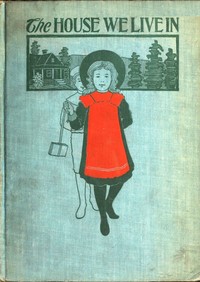
The House We Live In; or, The Making of the Body by Vesta J. Farnsworth
I stumbled upon this book while browsing old public domain titles, and the title 'The House We Live In; or, The Making of the Body' hooked me. Published in 1910 by Vesta J. Farnsworth, it’s not the kind of book you find on modern shelves. It’s a science primer for young readers, but written with a creativity most textbooks lack.
The Story
There’s no traditional plot with characters. Instead, Farnsworth uses a brilliant metaphor: your body is a house. She takes you on a room-by-room tour. The mouth and stomach are the 'kitchen' where food is prepared. The heart is the 'engine room' that powers everything. The lungs are the 'ventilation system.' She explains digestion, circulation, and the nervous system through this simple, tangible framework. The 'story' is the daily drama of running this house—taking in supplies (food), dealing with waste, and constantly defending against 'germ invaders' trying to cause trouble.
Why You Should Read It
This book is a fascinating piece of history. Reading it, you get a direct line to what an educated person in 1910 thought about health and biology. Her explanations are a mix of the accurate (the importance of clean water) and the charmingly outdated (some of the causes of disease). Her tone is warm and encouraging, like a kindly aunt explaining the world. What struck me most was her focus on personal responsibility—she constantly links how you treat your 'house' (with good food, fresh air, rest) to how well it runs. It’s a holistic view of health that still feels relevant, even if the science has evolved.
Final Verdict
This isn't for someone looking for a thrilling novel. It's a short, curious read perfect for history lovers, teachers looking for a unique primary source, or anyone who enjoys seeing how ideas are explained across different eras. It’s a reminder that great teaching is about making connections, and Farnsworth’s 'house' metaphor does that beautifully. You’ll come away with a smile, a bit of historical insight, and maybe a renewed决心 to take care of your own bodily 'house.'
This book is widely considered to be in the public domain. Use this text in your own projects freely.
Joshua Allen
1 year agoI was skeptical at first, but the plot twists are genuinely surprising. Absolutely essential reading.
Ethan Torres
4 months agoLoved it.
Michael Lee
1 year agoHaving read this twice, the arguments are well-supported by credible references. Don't hesitate to start reading.
Emma Clark
1 year agoEnjoyed every page.

Daniel Taylor
1 year agoI have to admit, the arguments are well-supported by credible references. I learned so much from this.