
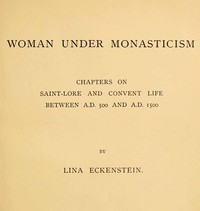
Woman under Monasticism by Lina Eckenstein
First published in 1896, Lina Eckenstein's 'Woman under Monasticism' isn't a novel with a traditional plot. Instead, it's a recovery mission. Eckenstein digs through centuries of dusty records, letters, and religious rules to piece together the daily lives of women in medieval convents across Europe.
The Story
Think of it less as a story and more as a guided tour through a lost world. Eckenstein starts by showing why a woman might choose the cloister—often it was the only path to education, safety, or independence. She then walks us through the convent's day-to-day reality: the strict routines, the hidden rebellions, the intellectual pursuits, and the surprising political influence these communities held. We meet famous abbesses who ruled like queens, scribes who preserved ancient knowledge, and ordinary women who found a life of meaning away from the expectations of marriage and motherhood. The 'conflict' is quiet but constant: the struggle of these women to carve out spaces of autonomy, learning, and authority within a society that offered them few options.
Why You Should Read It
This book surprised me. I expected a dry academic text, but Eckenstein writes with a quiet passion that brings these women to life. You feel the weight of the silence in their cells, but also the buzz of activity in their scriptoriums and gardens. The most powerful theme is agency. These women weren't passive prisoners of faith; they were active architects of their own destinies. They used the structure of monasticism to create something radical: female-led communities that valued the mind and the spirit. Reading it made me question the simple story we often get about the 'Dark Ages.' It was a time of limitation for women, yes, but also of incredible, overlooked ingenuity.
Final Verdict
Perfect for readers who love hidden history, for anyone interested in women's studies, or for fans of books that challenge the standard narrative. If you enjoyed the feel of 'The Name of the Rose' but wished it focused on the sisters instead of the monks, this is your next read. It's not a fast-paced page-turner, but a thoughtful, rewarding exploration. You'll finish it looking at old stone abbeys and cathedral ruins with completely new eyes, wondering about the vibrant lives they once contained.
The copyright for this book has expired, making it public property. It serves as a testament to our shared literary heritage.
Paul Lee
1 year agoAfter finishing this book, the emotional weight of the story is balanced perfectly. Truly inspiring.
Lisa Perez
1 year agoThis is one of those stories where the depth of research presented here is truly commendable. Exceeded all my expectations.
Sandra Perez
6 months agoThanks for the recommendation.
Ethan Harris
10 months agoAs someone who reads a lot, the plot twists are genuinely surprising. Worth every second.





Jessica Rodriguez
1 year agoComparing this to other titles in the same genre, the practical checklists included are a great touch for real-world use. This exceeded my expectations in almost every way.