
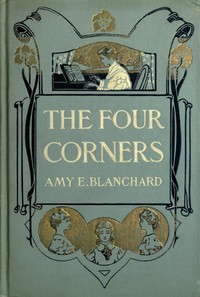
The four Corners by Amy Ella Blanchard
Published in 1906, Amy Ella Blanchard's 'The Four Corners' is a quiet charmer of a book. It doesn't rely on flashy action, but on the gentle drama of human connection. It’s the kind of story that pulls you in with its warmth and makes you care deeply about the people within its pages.
The Story
The plot begins with a surprise. Four women—Cornelia, Grace, Hope, and Faith—who are not related and barely know each other, are named as joint heirs to a peculiar inheritance. They each receive a letter summoning them to a remote, somewhat dilapidated house named 'The Four Corners.' The condition? They must live there together for a year to claim their full legacy. Each woman represents a different 'corner' of life: society, spirit, pragmatism, and art. Thrown into this shared space, they must navigate their clashing personalities, manage the quirky household, and unravel the secret reason why they were all chosen. The mystery isn't a dangerous one, but a personal one, tied to the past of the man who brought them all together.
Why You Should Read It
What makes this book special is its heart. Blanchard writes her characters with such clear-eyed affection. You get to watch as initial suspicion and awkwardness slowly melt into understanding, loyalty, and genuine friendship. In a time when women's options were limited, this story is quietly revolutionary. It shows women building their own community, relying on each other's strengths, and creating a home on their own terms. The 'four corners' of the title aren't just about the house; they're about how different personalities can fit together to make something whole and strong. It’s a hopeful, comforting read.
Final Verdict
'The Four Corners' is a perfect pick for readers who enjoy classic, character-focused novels like those by L.M. Montgomery or Louisa May Alcott. It's for anyone who loves a good 'found family' story or is fascinated by stories of women's lives in the early 20th century. Don't come looking for high stakes or fast-paced thrills. Come instead for a soothing, insightful portrait of friendship and the simple, powerful act of building a home together. It’s a delightful, forgotten classic that deserves a new audience.
This publication is available for unrestricted use. You are welcome to share this with anyone.
Sarah Taylor
10 months agoRight from the opening paragraph, the narrative arc keeps the reader engaged while delivering factual content. Truly a masterpiece of digital educational material.
Patricia Garcia
2 months agoIt took me a while to process the complex ideas here, but the bibliography and references suggest a high level of research and authority. I'll be citing this in my upcoming project.
Paul Garcia
3 months agoI found the data interpretation to be highly professional and unbiased.
Christopher Johnson
1 month agoAs a long-time follower of this subject matter, the footnotes provide extra depth for those who want to dig deeper. I'll be recommending this to my students and colleagues alike.
Elizabeth Davis
10 months agoThought-provoking and well-organized content.