1

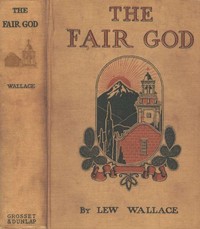
The Fair God; or, The Last of the 'Tzins: A Tale of the Conquest of Mexico — Inside the Classic
(0 User reviews)
2271
Project Gutenberg
2013
Not confirmed
Historical fiction; Biographical fiction; Mexico -- History -- Conquest, 1519-1540 -- Fiction; Aztecs -- Fiction; Montezuma II, Emperor of Mexico, approximately 1480-1520 -- Fiction; Cortés, Hernán, 1485-1547 -- Fiction
Readers of public-domain and historical texts
Project Gutenberg digital edition
en
Edition facts
Words
184,737
Reading time
804 min
Text sections
17
Before opening The Fair God; or, The Last of the 'Tzins: A Tale of the Conquest of Mexico — Inside the Classic, the edition data offers a quick orientation: 184,737 words, 13 hr 24 min estimated reading time, and 17 detected text sections.
The text analysis averages about 16.1 words per sentence, while the detected sections provide another way to judge how the source is divided.
Project Gutenberg metadata also associates the work with “Historical fiction,” connecting these edition facts with the source record’s subject description.
Source:
Project Gutenberg record #43340
Lew Wallace's 1873 novel uses a fictional translator's frame to narrate the Aztec perspective on the Spanish conquest, with ornate dialogue, ceremonial diction, and detailed descriptions of ritual sacrifice and court politics.
Editorial Edition Score
4.8/5
★★★★★
★★★★★
Calculated from edition completeness, EPUB availability, text structure and catalogue metadata. Not a user rating.
How this score is calculated
- Description quality20 pts
- Title & short description10 pts
- Source metadata20 pts
- Text length15 pts
- Chapters / structure15 pts
- EPUB file integrity20 pts
Total of 100 points, scaled to a 2.5-5.0 range. Editions with an empty description or a missing EPUB file are not scored.
Edition quality
Public-domain source text
Read the source text
The source text is kept in the dedicated reader, separate from this catalogue record and its commentary.
Lew Wallace's The Fair God; or, The Last of the 'Tzins (1873) adopts a distinctive narrative frame: the author pretends to be a translator of a manuscript by Don Fernando de Alva, a Tezcucan literator. This device allows Wallace to write in a style he considers authentic to a native chronicler, blending formal, ceremonial dialogue with detailed descriptions of Aztec ritual and politics. The excerpts reveal a text dense with invocations to gods like Huitzil' and Quetzal', and a courtly language of deference and command.
Ceremonial Diction and Ritual Speech
The dialogue in the excerpts is marked by elaborate formality and religious invocation. Characters address Montezuma as "O king" and frame political decisions as divine will. For instance, the teotuctli proclaims: "Huitzil', the Supreme God, has answered, and bids him begin the war." This phrasing elevates military strategy to sacred duty. The king responds with "To Huitzil' be the praise!" and Cuitlahua echoes "And to Montezuma the glory!"—a call-and-response pattern that reinforces hierarchy. Such ritualized speech recurs throughout, suggesting Wallace's deliberate choice to depict Aztec culture as deeply ceremonial, where every action is couched in religious terms.
The Translator's Frame and Narrative Voice
Wallace's prefatory note explains his theory that firsthand narration carries more weight. By claiming to translate a Tezcucan manuscript, he adopts a voice that is both intimate and distanced—intimate in its access to royal councils, distanced by the conceit of translation. This allows him to include details like the counting of victims ("nine hundred in all") and the description of ritual heart-extraction without authorial judgment. The frame also excuses anachronisms or invented dialogue, as the text purports to be a native account. Readers should note how this device shapes the novel's authority and perspective.
Characterization Through Gesture and Action
Wallace conveys character through physical actions and symbolic gestures. When Io' kneels and lays his shield before the king, the act is both a request and a pledge. Cuitlahua "laid a hand upon his head" in blessing, his "massive features glowing with honest pride." These moments of touch and posture—kissing hands, kneeling, standing with downcast eyes—communicate loyalty, hierarchy, and emotion without explicit interiority. Even Montezuma's smile "broke through his seriousness" to offer Nenetzin in marriage, a gesture that mixes political calculation with personal warmth. Such details build a vivid, embodied sense of court life.
Setting and Sensory Detail in the Excerpts
The excerpts offer glimpses of setting through sensory cues: the "sound of prayer from the holy men was unintermitted and loud," the "azoteas crowded with the strangers," and the heart flung "into the fire before the altar." These details ground the narrative in a specific, tangible world. The causeways, bridges, and teocallis are named but not described at length; instead, Wallace focuses on the human actions within them. The mention of "the drum of Huitzil'" as a signal for war ties sound to plot. Readers attentive to such environmental cues will find the novel's world built through cumulative, action-linked impressions rather than static description.
Readers approaching The Fair God should attend to the interplay between Wallace's invented translator and the historical events he adapts. The novel's ornate language and ritualistic dialogue are not mere decoration but deliberate authorial choices that shape its portrayal of Aztec society. By grounding the narrative in a native voice, Wallace invites readers to consider the conquest from a perspective rarely represented in nineteenth-century American literature.
There’s something about returning to Wallace’s Mexico—that strange, ceremonial gravity—that reminds me of evenings spent with Carton’s quiet surrender. Both books feel less like stories and more like lingering echoes of people who knew their endings early. I keep them close on the shelf, old friends I only visit when the house is still. A Tale of Two Cities — A Closer Reading catches that same muted light, somehow.
There are no reviews for this eBook.
There are no comments for this eBook.
Reader reflection
What did you think of this book?
Answer a few questions and save a private reflection on this device.
Your progress
0
/
10
2
Was reading this book enjoyable?
3
Is this a title you would suggest to others?
4
How demanding did the text feel?
5
How understandable was the text?
6
How much did the book move you?
7
Would this book work well in a reading group?
8
Did anything about the book feel genuinely new?
9
What changed or sharpened your thinking?
10