1

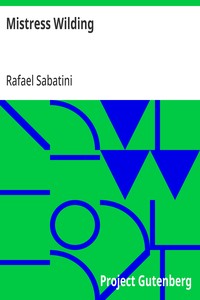
Mistress Wilding — Background and Themes
(0 User reviews)
985
Project Gutenberg
1998
Not confirmed
Historical fiction; War stories; Love stories; Adventure stories
Readers of public-domain and historical texts
Project Gutenberg digital edition
en
Edition facts
Words
92,813
Reading time
404 min
Text sections
11
The catalog record for Mistress Wilding — Background and Themes provides practical reading context through 92,813 words, 6 hr 44 min estimated reading time, and 11 detected text sections.
The text analysis averages about 14.9 words per sentence, while the detected sections provide another way to judge how the source is divided.
Project Gutenberg metadata also associates the work with “Historical fiction,” connecting these edition facts with the source record’s subject description.
Source:
Project Gutenberg record #1457
Sabatini's novel opens with a wine-soaked insult at a dinner table, then moves through political scheming and a forced marriage, with the Monmouth Rebellion looming. The excerpts reveal a story driven by sharp dialogue, tense confrontations, and a protagonist whose calm demeanor masks dangerous convictions.
Editorial Edition Score
4.8/5
★★★★★
★★★★★
Calculated from edition completeness, EPUB availability, text structure and catalogue metadata. Not a user rating.
How this score is calculated
- Description quality20 pts
- Title & short description10 pts
- Source metadata20 pts
- Text length15 pts
- Chapters / structure15 pts
- EPUB file integrity20 pts
Total of 100 points, scaled to a 2.5-5.0 range. Editions with an empty description or a missing EPUB file are not scored.
Edition quality
Public-domain source text
Read the source text
The source text is kept in the dedicated reader, separate from this catalogue record and its commentary.
The opening chapter, “Pot-Vaillance,” plunges the reader into a tense dinner scene where a young man, Westmacott, hurls wine into Mr. Wilding’s face. The narrative dwells on the reactions of the dozen guests—Blake sucking his lip, Trenchard drumming his fingers, Lord Gervase turning crimson—before focusing on Wilding’s unnerving composure. His “low-lidded” eyes and “gentle melancholy” are established early, as is his ruined Mechlin lace. The incident sets up a personal conflict that quickly expands into political intrigue.
A Deliberate Opening Gambit
The first chapter’s title, “Pot-Vaillance,” signals a theme of drunken bravado, but the prose undercuts it with controlled detail. The table is described as a “deep brown pool” reflecting silver and crystal—a still life before the storm. Wilding’s response to the insult is not immediate retaliation but a lingering smile, “departed from his eyes.” The narrator notes his “odd eyes” set at a “downward slant,” giving him an air of supercilious melancholy. This careful physical description suggests a character who observes more than he reveals.
Political Counsel and Foreshadowing
In a later excerpt, Wilding addresses the Duke of Monmouth and his council, arguing that the invasion is “rash, premature, and ill-advised.” His speech is measured, contrasting with Grey’s hot-tempered interruptions. Wilding warns that the people’s “burden of oppression” must be allowed to grow until “from the cottage of the ploughman the infection of anger should have spread to the mansion of the squire.” This metaphor of spreading infection reveals his strategic patience. The Duke’s “boyish face” and the council’s varied reactions—Ferguson’s Scottish accent, Fletcher’s impatience—paint a factionalized rebellion.
The Weight of a Name
The title Mistress Wilding points to a female character, but the excerpts focus almost entirely on male political maneuvering. The opening insult involves Westmacott’s sister, whose eyes are toasted, yet she remains absent. This gap invites curiosity: how does Ruth Westmacott, mentioned in chapter titles like “The Nuptials of Ruth Westmacott,” intersect with the rebellion? The narrative’s early emphasis on Wilding’s composure and his role as a conspirator suggests that the “mistress” may be a pawn or a catalyst in a larger game.
Voice and Structure in the Excerpts
Sabatini’s prose is ornate but precise, favoring long sentences that accumulate detail. The dinner scene uses a collective “stillness” and a list of onlookers to build tension. Dialogue is often interrupted by physical description—a “sneer seemed to freeze,” a “scowl” darkens a face. The excerpts are from the beginning and middle of the novel, so the full arc of the rebellion and the marriage plot remains unclear. However, the pattern of calm speech followed by explosive action (the wine-throwing, the council debate) suggests a rhythm of restraint and rupture.
Readers should attend to the interplay between public and private conflict. The opening insult is personal, but it unfolds among men who are soon revealed as rebels. Wilding’s quiet authority in the council scene echoes his earlier composure at the dinner table. The excerpts do not resolve whether his caution is wisdom or cowardice, nor do they show how Ruth Westmacott enters the story. These gaps are the engine of the novel.
Reading about Wilding’s quiet fury under that wine-soaked insult, I remembered a summer afternoon spent beneath a sycamore, tracing the last pages of The doom trail — Story, Setting & Ideas. Both stories carry that same slow-burning tension—men forced into corners by circumstance, their calm smiles barely hiding the storm beneath. It felt familiar, like revisiting an old ache I’d almost forgotten.
There are no reviews for this eBook.
There are no comments for this eBook.
Reader reflection
How will you remember this book?
Save your reaction, strongest insight, and memorable passage.
Your progress
0
/
10
2
Did this book hold your interest?
3
Is this a title you would suggest to others?
4
How much effort did this book require?
5
Could you see yourself revisiting this book?
6
How distinctive were its ideas or approach?
7
Which element worked best for you?
8
Would you like to discuss this book with someone?
9
What is the main idea you are taking away?
10