1

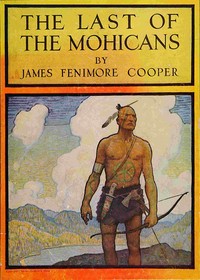
The Last of the Mohicans; A narrative of 1757 — Edition Insights
(0 User reviews)
318
Project Gutenberg
2006
Not confirmed
Historical fiction; War stories; United States -- History -- French and Indian War, 1754-1763 -- Fiction; Adventure stories; Frontier and pioneer life -- Fiction; Bumppo, Natty (Fictitious character) -- Fiction; Mohegan Indians -- Fiction
Readers of public-domain and historical texts
Project Gutenberg digital edition
en
Edition facts
Words
152,572
Reading time
664 min
Text sections
35
This digital edition of The Last of the Mohicans; A narrative of 1757 — Edition Insights is described by source-level measurements including 152,572 words, 11 hr 4 min estimated reading time, and 35 detected text sections.
The text analysis averages about 25.5 words per sentence, while the detected sections provide another way to judge how the source is divided.
Project Gutenberg metadata also associates the work with “Historical fiction,” connecting these edition facts with the source record’s subject description.
Source:
Project Gutenberg record #940
Cooper's 1826 novel contrasts Native American character traits, uses vivid wilderness imagery, and opens with a tense scene of five men entering a desolate fort, revealing distinct reactions to horror.
Editorial Edition Score
4.9/5
★★★★★
★★★★★
Calculated from edition completeness, EPUB availability, text structure and catalogue metadata. Not a user rating.
How this score is calculated
- Description quality20 pts
- Title & short description10 pts
- Source metadata20 pts
- Text length15 pts
- Chapters / structure15 pts
- EPUB file integrity20 pts
Total of 100 points, scaled to a 2.5-5.0 range. Editions with an empty description or a missing EPUB file are not scored.
Edition quality
Public-domain source text
Read the source text
The source text is kept in the dedicated reader, separate from this catalogue record and its commentary.
Cooper's narrative opens not with a battle but with a deliberate, cautious approach to a scene of recent violence. Five men—two Mohicans, a white scout, and two officers—enter a ruined fort where the dead lie unburied. Their reactions to the same horrors diverge sharply: one Indian remains impassive, an older white man groans aloud, and a younger one suppresses his feelings. This early contrast in composure under stress establishes a central pattern: the novel repeatedly measures characters by their responses to extremity.
The author's introduction further frames the work by dwelling on the perceived contradictions of Native American character—'daring, boastful, cunning' in war, yet 'just, generous, hospitable' in peace. Cooper also speculates on Asiatic origins and the 'oriental' quality of Indian imagery, blending ethnographic commentary with the fiction that follows.
Contrasts in Composure
The excerpt from Chapter I presents five men whose visible reactions to the same grisly scene are deliberately differentiated. The young Indian, Uncas, moves with 'caution and activity' but throws 'furtive glances' at the mangled victims. His red associate, however, passes with 'a steadiness of purpose' and an 'eye so calm.' Among the white men, the older officer (Munro) groans 'aloud' at horrors, while the younger (Heyward) shudders but suppresses his feelings. The straggler in the rear alone betrays his thoughts with 'execrations so bitter and deep.'
This spectrum—from stoic composure to open grief to barely contained fury—is not merely atmospheric. It establishes a behavioral code that the novel will test repeatedly. The scout, described as 'long experienced in scenes of war,' is placed between the extremes, his groans suggesting seasoned vulnerability rather than weakness.
The Language of the Wilderness
Cooper's prose in the excerpt is dense with sensory and metaphorical description. The forest is a 'green ocean of woods'; the ruined fort is a 'scene of wildness and desolation' where the dead appear 'stricken, at a blow, by the relentless arm of death.' Such personification and simile give the landscape an active, almost punitive role.
The author's introduction further explains that Indian imagery draws 'metaphors from the clouds, the seasons, the birds, the beasts, and the vegetable world.' Cooper himself employs this method, clothing the narrative in a 'dress' of natural metaphor. The result is a style that mirrors the very 'oriental' richness he attributes to Native oratory—a self-conscious literary strategy that ties the novel's voice to its subject matter.
Ethnographic Framing and Its Limits
Cooper's introduction is a curious blend of observation and speculation. He asserts that 'few men exhibit greater diversity, or greater antithesis of character, than the native warrior,' listing war traits (daring, cunning, ruthless) alongside peace traits (just, generous, chaste). He then ventures into physical anthropology, noting 'cheek-bones have a very striking indication of a Tartar origin' while 'his eyes have not.'
These passages reveal the author's attempt to ground his fiction in contemporary racial theory. Yet the novel itself does not consistently adhere to these generalizations. The excerpt shows Uncas as both cautious and emotionally affected—a more nuanced portrait than the introduction's binary. Readers should note where the story complicates or contradicts the prefatory claims, especially as the narrative unfolds beyond the scenes provided here.
Readers approaching The Last of the Mohicans will find that its power lies less in plot mechanics than in the charged interplay between character and setting. Pay attention to how each figure's bearing under pressure—whether stoic, expressive, or volatile—shapes the group's dynamics. The novel's language, thick with metaphor and personification, rewards slow reading; its ethnographic passages invite skepticism. The excerpts here offer only the opening tableau, but they establish a pattern of contrasts that reverberates throughout the work.
The rain kept time against the window while I turned the pages, watching those five men absorb the fort’s hush. That particular quiet—how dread settles without a sound—stayed with me afterward. Fumbling for a bookmark, my hand instead found a slip of notes on political factions, Vittoria — Volume 7 — Reading Notes, and I sat with both for a while, their separate silences oddly companionable.
There are no reviews for this eBook.
There are no comments for this eBook.
Reader reflection
Take a moment to reflect on this book
Create a short personal record of your experience with this book.
Your progress
0
/
10
2
How much did you enjoy the reading experience?
3
Would you recommend this book to another reader?
4
How demanding did the text feel?
5
Was the book easy to understand?
6
Would you read this book again?
7
How much did the book move you?
8
How would you describe its reading pace?
9
In one sentence, what did you learn?
10