1

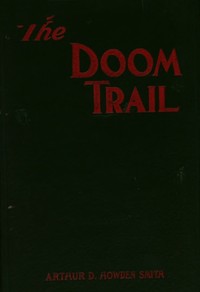
The doom trail — Story, Setting & Ideas
(0 User reviews)
2013
Project Gutenberg
2023
Not confirmed
Historical fiction; Canada -- History -- To 1763 (New France) -- Fiction; United States -- History -- Colonial period, ca. 1600-1775 -- Fiction; Fur trade -- Fiction; Iroquois Indians -- Fiction
Readers of public-domain and historical texts
Project Gutenberg digital edition
en
Edition facts
Words
99,056
Reading time
431 min
Text sections
10
For The doom trail — Story, Setting & Ideas, the stored edition analysis reports 99,056 words, 7 hr 11 min estimated reading time, and 10 detected text sections.
The text analysis averages about 14.1 words per sentence, while the detected sections provide another way to judge how the source is divided.
Project Gutenberg metadata also associates the work with “Historical fiction,” connecting these edition facts with the source record’s subject description.
Source:
Project Gutenberg record #70683
A historical novel set in colonial North America, following a young man's journey through the Iroquois Long House and French-English rivalries, framed by a prologue that addresses the reader as a council fire guest.
Editorial Edition Score
4.8/5
★★★★★
★★★★★
Calculated from edition completeness, EPUB availability, text structure and catalogue metadata. Not a user rating.
How this score is calculated
- Description quality20 pts
- Title & short description10 pts
- Source metadata20 pts
- Text length15 pts
- Chapters / structure15 pts
- EPUB file integrity20 pts
Total of 100 points, scaled to a 2.5-5.0 range. Editions with an empty description or a missing EPUB file are not scored.
Edition quality
Public-domain source text
Read the source text
The source text is kept in the dedicated reader, separate from this catalogue record and its commentary.
The novel opens with a prologue that directly addresses the reader, inviting them to rest at a Council Fire before setting foot on the long trail into Yesterday. The narrator, speaking as a member of the Ho-de-no-san-nee (the Iroquois League), offers a White Belt as a token of straight words. This framing device establishes a ceremonial tone and positions the reader as a participant in a remembered world, where the Long House is scattered and the trails of war parties are wiped out by white men's roads.
The prologue mourns the loss of the Great League, the Council Fire at Onondaga, and the Roy-an-ehs who once ruled from the Great Lakes to the Sioux and Cherokee lands. Yet it also asserts that once the Iroquois were strong, and even the white man feared them, choosing which European power should rule. This opening sets up a narrative that moves between the Iroquois perspective and the colonial struggles of French and English.
The Prologue as a Structural Frame
The prologue is not merely an introduction but a structural device that shapes the reader's experience. It uses the metaphor of a Council Fire, tobacco leaves, and a White Belt to create a ritual space. The narrator speaks in the first-person plural (“we of the Ho-de-no-san-nee”), blending collective memory with a lament for a lost era. This voice recurs only in the prologue, suggesting that the main narrative will be told from a different perspective—likely a white protagonist. The shift from the prologue's ceremonial language to the direct action of Chapter I, which begins with a fray in Mincing Lane, marks a stark transition from mythic recollection to historical adventure.
Recurring Images of Trails and Doors
The title The Doom Trail is echoed throughout the excerpts by references to trails, doors, and paths. The prologue mentions the Long House with its Eastern Door guarded by Mohawk Wolves and Western Door by Seneca Wolves, opening onto the Thunder Waters of Jagara. Later, Joncaire speaks of controlling intercourse between western tribes and the English, and of a fort that threatens the Iroquois. The imagery of trails—both literal and metaphorical—recurs: the “long trail” into Yesterday, the “Great Trail” of the Iroquois, and the “Doom Trail” itself. These paths are not just routes but symbols of power, trade, and survival in a contested wilderness.
Movement Between Settings: London to the Wilderness
The excerpts show a deliberate movement between contrasting settings. Chapter I is set in Mincing Lane, London, a mercantile hub, while later scenes shift to the Canadian wilderness, where Joncaire discusses fortifications and trade. The prologue situates the reader in an abstract, mythic space, but the narrative quickly grounds itself in specific locations: a London street, a fort on a river, a council chamber. This movement mirrors the colonial expansion of the period, as characters travel from the Old World to the New, and from European centers to frontier outposts. The contrast between the cramped lanes of London and the vast forests of New France underscores the scale of the conflict.
Voice and Dialogue in the Excerpts
The excerpts reveal a variety of voices. The prologue uses a formal, oratorical style with repeated phrases (“O my reader”) and Iroquois terminology. In contrast, the dialogue between Joncaire and Jean is colloquial and peppered with French exclamations (“Mon Dieu”, “tonnerrr-rrr-rr-re de Dieu”). Joncaire's speech is pragmatic and cynical, as when he explains that trade mastery leads to military mastery. The narrator's voice in the main text is more neutral, but the prologue's distinct tone suggests that the author is experimenting with perspective. The use of Iroquois names and concepts (Ga-oh, Ha-wen-ne-yu) adds authenticity, though the excerpts do not reveal how consistently this is maintained.
Readers should pay attention to how the prologue's ceremonial framing colors the subsequent narrative. The novel's structure—moving from London to the wilderness, from council fires to trading posts—invites comparison between European and Indigenous worldviews. The recurring imagery of trails and doors may foreshadow key turning points. Approach the text as a historical adventure that uses its setting to explore themes of power, loss, and cultural collision, but remember that the excerpts offer only glimpses of a longer journey.
Sitting with The Doom Trail, I kept thinking about how the council fire prologue makes you feel like a guest at a story. That same sense of being quietly ushered into a contested world—where borders shift like river currents—returned to me later, almost unbidden, while considering 54-40 or Fight — A Reader’s Guide. It’s a different century, yet the same ache of land and allegiance lingers.
There are no reviews for this eBook.
There are no comments for this eBook.
Reader reflection
What did you think of this book?
Answer a few questions and save a private reflection on this device.
Your progress
0
/
10
2
What was your overall reaction to the book?
3
Is this a title you would suggest to others?
4
Did the language feel accessible?
5
Would this book work well in a reading group?
6
Did any part of the book stay with you emotionally?
7
Do you expect to return to this book?
8
How useful did the reading feel?
9
What changed or sharpened your thinking?
10