
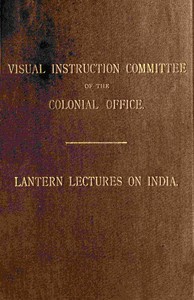
Eight Lectures on India by Halford John Mackinder
Let's set the scene. It's 1910. The British Raj is in full swing, but the calls for Indian self-rule are getting louder. Into this moment steps Halford John Mackinder, a famous British geographer and politician. He's not an expert on India, but he's invited to give a series of eight lectures. His goal? To make sense of this vast, complex land for a curious British public. What unfolds is a fascinating and often uncomfortable look through a very specific lens.
The Story
There's no traditional plot here. Instead, Mackinder builds his case lecture by lecture. He starts with the physical stage: the towering Himalayas, the fertile river plains, the strategic coastline. He argues that this geography dictated India's history—its invasions, its kingdoms, its isolation. Then, he layers on the people, the religions, the economies. Finally, he gets to the big question: India's place in the British Empire and the world. He paints a picture of India as both a vital asset and a colossal responsibility for Britain. The tension comes from reading between his logical, geographical lines and sensing the immense political and human realities he simplifies or overlooks.
Why You Should Read It
This book is a masterclass in perspective. Mackinder is brilliant, methodical, and completely of his time. His arguments are clean and persuasive, which is exactly what makes them so revealing. You see how a top imperial thinker connected dots between land and power. You also see the blind spots—the way a living, breathing culture gets analyzed like a chessboard. Reading it today isn't about agreeing with him. It's about engaging with a primary source that helped shape an era. It makes you ask your own questions: Who gets to define a nation? How does a ruler's mindset work? The book doesn't answer these, but it forces them to the surface in a way modern histories often can't.
Final Verdict
This isn't a beach read. It's for the curious reader who loves history, politics, or ideas. It's perfect for anyone who enjoyed Why Nations Fail or Guns, Germs, and Steel but wants to see that style of thinking in its raw, original form, complete with all its historical baggage. If you're looking for a neutral history of India, look elsewhere. But if you want a gripping, thought-provoking look at the machinery of imperial thought, told in clear, confident prose from the heart of the empire, pick this up. It's a short, potent dose of intellectual history.
This is a copyright-free edition. You can copy, modify, and distribute it freely.
Thomas Taylor
1 year agoI particularly value the technical accuracy maintained throughout.
Margaret Brown
5 months agoGiven the current trends in this field, the way the author breaks down the core concepts is remarkably clear. Highly recommended for those seeking credible information.
Matthew Rodriguez
1 year agoWhile browsing through various academic sources, the clarity of the writing makes even the most dense sections readable. A solid investment for anyone's personal development.
Mary Thompson
11 months agoThe analytical framework presented is both innovative and robust.





James Moore
7 months agoThis work demonstrates a clear mastery of contemporary theories.