1

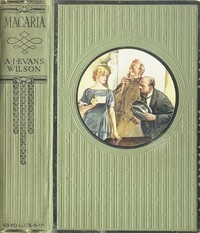
Macaria — A Closer Reading
(0 User reviews)
1723
Project Gutenberg
2009
Not confirmed
War stories; Love stories; Confederate States of America -- History -- Fiction; Women and war -- Fiction; United States -- History -- Civil War, 1861-1865 -- Women -- Fiction
Readers of public-domain and historical texts
Project Gutenberg digital edition
en
Edition facts
Words
93,239
Reading time
406 min
Text sections
10
For Macaria — A Closer Reading, the stored edition analysis reports 93,239 words, 6 hr 46 min estimated reading time, and 10 detected text sections.
The text analysis averages about 17.8 words per sentence, while the detected sections provide another way to judge how the source is divided.
Project Gutenberg metadata also associates the work with “War stories,” connecting these edition facts with the source record’s subject description.
Source:
Project Gutenberg record #27811
Augusta J. Evans's Macaria opens with a midnight scene of Russell Aubrey, a poor but ambitious young man, bent over a ledger. The novel traces his rise, his complex relationship with Irene, and the impact of the Civil War on Southern women, using detailed physical descriptions and social commentary.
Editorial Edition Score
4.8/5
★★★★★
★★★★★
Calculated from edition completeness, EPUB availability, text structure and catalogue metadata. Not a user rating.
How this score is calculated
- Description quality20 pts
- Title & short description10 pts
- Source metadata20 pts
- Text length15 pts
- Chapters / structure15 pts
- EPUB file integrity20 pts
Total of 100 points, scaled to a 2.5-5.0 range. Editions with an empty description or a missing EPUB file are not scored.
Edition quality
Public-domain source text
Read the source text
The source text is kept in the dedicated reader, separate from this catalogue record and its commentary.
The novel begins at midnight, with the town-clock striking twelve and a candle burning low, as Russell Aubrey, a sixteen-year-old of unusual height and breadth, works over a ledger. The description of his grey homespun coat, his snowy white collar, and his large, faultlessly proportioned head establishes a character who is youthful in years but old in trials. The narrative immediately signals his poverty and his formidable will, ambition, and intellect. The opening scene is not merely atmospheric; it introduces a protagonist whose physical appearance and austere expression are carefully linked to his social position and inner drive.
A Portrait of Ambition and Social Climbing
The early excerpts focus on Russell Aubrey's rise from a poor clerk to a talented lawyer and prospective heir. The text lingers on his physical description—his lofty forehead, heavy brows, and full firm lips—and contrasts his humble origins with his growing social acceptance. A key scene occurs at a party where Russell, having been invited after years of exclusion, observes the fashionable crowd with bitter memories of his mother's servitude. The narrative notes that he is now “as polished as if he had spent his life at court,” yet his stern expression and proud defiance remain. The excerpts also introduce Irene, described as “the only perfectly beautiful woman” Russell has ever seen, though her cold manner stings him. Their dynamic is set against a backdrop of social maneuvering, with Russell determined to rule the circle that once shunned his family.
Irene's Hauteur and Russell's Defiance
Irene's character is established through her chilling demeanor and the effect she has on others. When Russell encounters her at the Henderson party, she offers only a “haughty, dazzling smile” and a curt “Thank you, sir.” Another character, Eric, remarks that Irene makes him sad to watch her countenance. Russell, in turn, recalls an old Scandinavian myth, comparing her to Iduna offering apples of immortality. The excerpts show that Irene had previously dared much to assist Russell's family, making her current coldness puzzling to him. This shift in her manner provokes “proud defiance” in Russell, and he resolves to attend the party despite his earlier reluctance. The social tension between them is palpable, and the narrative hints at a deeper history that the reader must piece together from later chapters.
The Civil War and Women's Roles
Later excerpts shift to the Civil War period, as indicated by chapter titles such as “Civil War,” “Hospital Stores,” and “Womanly Usefulness.” The catalog subjects confirm that the novel explores women's experiences during the conflict, including their work in hospitals and their support for the Confederate cause. One chapter is titled “The Sanctified Devotion and Full Work,” suggesting a thematic focus on female sacrifice and duty. The excerpts do not provide full scenes from these chapters, but the progression from social drama to war narrative is clear. The novel appears to use the war as a crucible for its characters, testing their loyalties and transforming their relationships. Readers should expect the war to intensify the personal conflicts introduced in the earlier sections, particularly between Russell and Irene.
Recurring Motifs: Light, Clothing, and Social Status
Throughout the excerpts, specific details recur that reward close attention. The opening candlelight and the flickering light on the ledger pages establish a motif of illumination and obscurity. Clothing is another recurring marker: Russell's grey homespun coat and loose black ribbon contrast with the “costly silks” and jewels at the Henderson party. The narrative uses these details to signal shifts in social standing—Russell dons a new pair of gloves before entering the mansion, a small but telling gesture. The “brazen candlestick” and the “melted tallow” evoke a domestic economy of scarcity, while the “blazing parlours” of the wealthy represent a different world. These material details are not decorative; they ground the novel's social commentary in tangible objects.
As you read Macaria, pay attention to how the narrative voice shifts between close physical description and broader social observation. The early chapters establish a pattern of contrasting interiors—the humble study versus the glittering ballroom—that the war chapters likely invert or complicate. The title itself, meaning “blessed” or “happy” in Greek, may carry ironic weight given the trials the characters face. Let the specific, often austere details guide your reading rather than expecting a conventional romance.
Sitting with Macaria’s midnight ledger scene, I found myself thinking of Russell’s quiet ambition against the weight of history, and then my mind drifted to Old Ticonderoga, a Picture of the Past (From: "The Snow Image and Other Twice-Told Tales") — Reading Companion. Both books linger on how a place holds time—the way a campfire or a ruined fort whispers of what once was, patiently waiting to be remembered.
There are no reviews for this eBook.
There are no comments for this eBook.
Reader reflection
How did this book work for you?
Your answers remain private and are stored only in this browser.
Your progress
0
/
10
2
What was your overall reaction to the book?
3
How likely are you to recommend this book?
4
What was the reading difficulty like?
5
How did the pace of the book feel?
6
How personally connected did you feel to the book?
7
How clearly were the main ideas presented?
8
Is this a title worth rereading?
9
In one sentence, what did you learn?
10