1

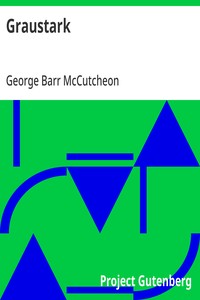
Graustark — Text and Context
(0 User reviews)
98
Project Gutenberg
2004
Not confirmed
Love stories; Adventure stories; Kings and rulers -- Fiction; Graustark (Imaginary place) -- Fiction; Imaginary places -- Europe, Eastern -- Fiction
Readers of public-domain and historical texts
Project Gutenberg digital edition
en
Edition facts
Words
95,053
Reading time
414 min
Text sections
11
Graustark — Text and Context can be approached with a clearer sense of reading commitment from its source measurements: 95,053 words, 6 hr 54 min estimated reading time, and 11 detected text sections.
The text analysis averages about 14.1 words per sentence, while the detected sections provide another way to judge how the source is divided.
Project Gutenberg metadata also associates the work with “Love stories,” connecting these edition facts with the source record’s subject description.
Source:
Project Gutenberg record #5142
An editorial note examining the structural movement between American and European settings, the recurring image of the monastery as a cold sentinel, and the use of dialogue to shift between intimacy and political intrigue in McCutcheon's Graustark.
Editorial Edition Score
4.8/5
★★★★★
★★★★★
Calculated from edition completeness, EPUB availability, text structure and catalogue metadata. Not a user rating.
How this score is calculated
- Description quality20 pts
- Title & short description10 pts
- Source metadata20 pts
- Text length15 pts
- Chapters / structure15 pts
- EPUB file integrity20 pts
Total of 100 points, scaled to a 2.5-5.0 range. Editions with an empty description or a missing EPUB file are not scored.
Edition quality
Public-domain source text
Read the source text
The source text is kept in the dedicated reader, separate from this catalogue record and its commentary.
Graustark opens with a weary traveler boarding a train in Denver, a scene that immediately establishes a pattern of movement across borders—geographic, social, and emotional. Grenfall Lorry’s chance encounter with a lady in a dark passageway sets in motion a narrative that shuttles between the familiar American West and the invented Eastern European principality of Graustark. The novel’s structure relies on these transitions, using travel as a device to propel the hero from boredom into adventure. The early chapters linger on the interior of a coach and the fleeting exchange of glances, while later scenes shift to the cold heights of a monastery and the claustrophobic corridors of a castle. This editorial note traces how the work’s architecture—its movement between scenes and its recurring images—shapes the story’s romantic and political tensions.
From Denver to Graustark: The Structure of Departure
The novel’s first chapter, “Mr. Grenfall Lorry Seeks Adventure,” begins with a detailed inventory of the protagonist’s world-weariness. He has traveled everywhere—Norway, India, the Scottish moors, South America, Russia, the Rhone valley, Brittany, Damascus—yet finds himself boarding an east-bound express “with all the air of a martyr.” This catalog of destinations serves not as mere background but as a structural counterpoint: the hero has exhausted the known world, and only the unknown (Graustark) can revive him. The train journey itself becomes a threshold. The encounter with a lady in the dark passageway is brief, but it shifts the narrative from solitary reflection to charged interaction. McCutcheon uses the confined space of the coach to accelerate intimacy, a technique he repeats later in carriages and castle corridors. The movement from Denver to Graustark is not just geographic; it is a transition from a world of familiar sights to one of invented politics and peril.
The Monastery as a Recurring Image
Throughout the excerpts, a monastery appears as a cold, distant sentinel. The princess gazes toward it and says, “It looks so peaceful up there,” to which Lorry replies, “But so cold and cheerless.” This exchange encapsulates the image’s dual function: it represents both refuge and isolation, spiritual height and emotional distance. The monastery is described as cutting “a square corner from the moon’s circle,” a precise visual that anchors the scene in a specific moment of shared contemplation. Later, the princess refers to it again as a “faraway sentinel,” reinforcing its role as a silent witness to the characters’ dilemmas. The image recurs not as mere decoration but as a structural anchor, a fixed point in a landscape of shifting allegiances and hidden threats. It contrasts with the bustling train and the ornate castle, offering a still, vertical element in a narrative that otherwise moves horizontally across borders and through rooms.
Dialogue as a Shifting Scene
McCutcheon often uses dialogue to transition between intimacy and political exposition. In one extended exchange, the princess and Lorry discuss the abduction plot, moving from personal fear to the theory that Prince Gabriel orchestrated the crime. The dialogue shifts register: she speaks of “squalor” and “poverty” in her castle, then of clues and officers sent to Ganlook. Lorry’s response—“I have a theory, a bold and perhaps a criminal theory”—bridges the romantic and the conspiratorial. The conversation takes place under the monastery’s gaze, with the moon cutting a square corner, so that setting and speech reinforce each other. The princess’s line, “He gives me a man to love and denies me happiness,” condenses the novel’s central tension into a single sentence. These dialogues are not static; they move the characters from one emotional state to another, often within the same paragraph, mirroring the larger structural movement between scenes.
The Castle as a Layered Space
The princess offers to show Lorry her castle: “my throne room, my chapel, my banquet hall, my ball room, my conservatory, my sepulchre.” This list is not exhaustive but suggestive of a vertical hierarchy—from public ceremony to private burial. The castle is a microcosm of Graustark’s political and emotional geography. The throne room represents authority; the sepulchre, mortality. The conservatory and ball room hint at leisure and display, while the chapel points to faith. McCutcheon does not describe these rooms in detail in the excerpts, but the princess’s offer implies that the castle’s layout will structure future scenes. The tower, mentioned in chapter titles like “In the Tower” and “From a Window Above,” suggests vertical movement—escapes, imprisonments, and vantage points. The castle is not a backdrop but an active element in the narrative’s architecture, with each room potentially hosting a different kind of confrontation.
Readers attentive to structure will notice how McCutcheon uses movement—by train, carriage, or on foot—to mark shifts in the characters’ relationships and the plot’s stakes. The recurring image of the monastery, cold and distant, provides a visual refrain that contrasts with the castle’s layered interiors. The dialogue often carries the burden of transition, blending confession with conspiracy. These elements together create a narrative that is as much about the spaces between events as about the events themselves.
Reading again how the monastery watches over Graustark like a cold sentinel, I found myself thinking of Atmâ A Romance — Reading Notes—both feel like places where silence holds more weight than conversation. The same ache of distance, the same hush between words, stayed with me long after the pages closed.
There are no reviews for this eBook.
There are no comments for this eBook.
Reader reflection
How will you remember this book?
Save your reaction, strongest insight, and memorable passage.
Your progress
0
/
10
2
Was reading this book enjoyable?
3
Would you pass this book on to a friend?
4
How demanding did the text feel?
5
Did the book give you something worth debating?
6
How well did it match your expectations?
7
Did this book create an emotional response?
8
How clearly were the main ideas presented?
9
Which lesson or insight stayed with you?
10