
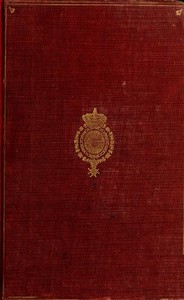
Cordova: A city of the Moors by Albert Frederick Calvert and Walter M. Gallichan
Forget the dusty history textbooks of your school days. Cordova: A City of the Moors is something else entirely. Written by Albert Frederick Calvert and Walter M. Gallichan at the turn of the 20th century, it's part travelogue, part historical excavation, and a complete love letter to a lost civilization.
The Story
There isn't a traditional plot with characters, but the 'story' is the rise and fall of the city itself. The book takes you from Cordova's humble beginnings to its spectacular peak under the Umayyad Caliphate, when it was arguably the most advanced city on Earth. The authors walk you through its legendary library (which housed hundreds of thousands of manuscripts), its revolutionary street lighting and running water, and the Great Mosque that stood as a monument to faith and artistry. Then, they trace the slow unraveling—the political fractures, the Reconquista, and the city's gradual fade from the world stage. The narrative is built around the physical remains: what the ruins and old chronicles tell us about the people who built them.
Why You Should Read It
What makes this book special is its sense of wonder. Gallichan and Calvert aren't just listing facts; they're visibly impressed by what Cordova achieved. They make you feel the buzz of its markets, the quiet intensity of its scholars translating Greek texts, and the sheer awe of a visitor seeing its grandeur for the first time. My favorite parts are the quiet observations about daily life—the coexistence of Muslims, Christians, and Jews, and how that interaction sparked so much innovation. It challenges the simplistic 'clash of civilizations' idea and shows a more complex, collaborative past. It’s a powerful reminder that progress isn't a straight line.
Final Verdict
This is the perfect book for a curious traveler, an armchair historian, or anyone who loves a good 'lost city' tale. If you've visited Andalusia and wanted to know more, or if you just enjoy stories about human achievement, you'll get a lot out of this. A heads-up: it's an older book, so some perspectives are of its time, but that almost adds to its charm as a historical artifact itself. Think of it as a deeply researched, beautifully written guidebook to a world you can no longer visit, except through these pages.
This historical work is free of copyright protections. It serves as a testament to our shared literary heritage.
Karen Perez
2 weeks agoThis digital copy caught my eye due to its reputation, the structural organization allows for quick referencing of key points. This has become my go-to guide for this specific topic.
Kimberly White
3 months agoThe research depth is palpable from the very first chapter.
Kimberly Miller
1 month agoThe clarity of the introduction set high expectations, and the level of detail in the second half of the book is truly impressive. The insights gained here are worth every minute of reading.
Margaret Gonzalez
7 months agoInitially, I was looking for a specific answer, but the way the author breaks down the core concepts is remarkably clear. This exceeded my expectations in almost every way.

Elizabeth Williams
9 months agoThe clarity of the introduction set high expectations, and the transition between theoretical knowledge and practical application is seamless. A perfect balance of theory and practical advice.