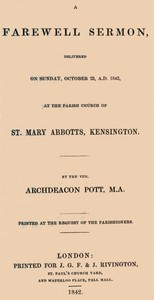
A Farewell Sermon by Joseph Holden Pott
Let's be clear from the start: this isn't a storybook. 'A Farewell Sermon' is a real document from a real moment of crisis. In 1810, Reverend Joseph Holden Pott stood before his congregation at St. Martin's-in-the-Fields in London for the last time. He wasn't leaving by choice. A new law required clergy to swear an oath of allegiance to the king in a specific way that Pott, along with others called 'Nonjurors,' felt crossed a line. They believed it undermined the church's independence. So, faced with the impossible choice of betraying his conscience or losing his pulpit, Pott chose to leave.
The Story
There's no traditional plot. The 'story' is the sermon itself. Pott explains, plainly and without theatrical anger, why he cannot comply with the law. He walks his congregation through his reasoning, emphasizing that his first duty is to God. He then turns his focus to them. This farewell becomes a final charge: he urges them to hold fast to genuine faith, to care for one another, and to seek true spiritual guidance. It's a heartfelt plea for them to remain a strong community even as he, their leader, is removed.
Why You Should Read It
You should read it because it's a stunning example of conviction. Pott's tone is remarkably calm and pastoral, not fiery or rebellious. That's what gets me. The power isn't in shouting; it's in the quiet strength of someone accepting heavy personal cost for what they believe is right. It pulls you into a very specific historical dilemma—church vs. state in 19th-century England—but the core question is timeless: What would you give up for your principles? Reading his reasoned arguments and his clear concern for his people makes that abstract question painfully concrete.
Final Verdict
This is a slim volume, but it packs a punch. It's perfect for history buffs interested in religious and political clashes, or for anyone who enjoys primary sources that offer a direct window into a person's mind at a critical juncture. If you like biographies or stories about moral courage, you'll find the man behind the sermon fascinating. It's not a light read, but it's a quick and profoundly moving one. You'll finish it in under an hour, but you'll think about it for much longer.
This masterpiece is free from copyright limitations. It serves as a testament to our shared literary heritage.