1

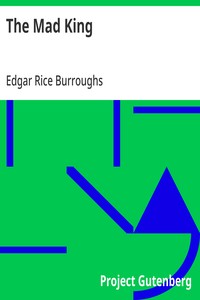
The Mad King — Story, Setting & Ideas
(0 User reviews)
113
Project Gutenberg
1995
Not confirmed
Fantasy fiction; Impostors and imposture -- Fiction; Adventure stories; Kings and rulers -- Fiction; Mistaken identity -- Fiction
Readers of public-domain and historical texts
Project Gutenberg digital edition
en
Edition facts
Words
97,800
Reading time
426 min
Text sections
29
The catalog record for The Mad King — Story, Setting & Ideas provides practical reading context through 97,800 words, 7 hr 6 min estimated reading time, and 29 detected text sections.
The text analysis averages about 16.7 words per sentence, while the detected sections provide another way to judge how the source is divided.
Project Gutenberg metadata also associates the work with “Fantasy fiction,” connecting these edition facts with the source record’s subject description.
Source:
Project Gutenberg record #364
Edgar Rice Burroughs's adventure novel follows American Barney Custer, mistaken for the escaped King Leopold of Lutha, as he navigates political intrigue, mistaken identity, and a romance with a mysterious woman in a fictional European kingdom.
Editorial Edition Score
4.9/5
★★★★★
★★★★★
Calculated from edition completeness, EPUB availability, text structure and catalogue metadata. Not a user rating.
How this score is calculated
- Description quality20 pts
- Title & short description10 pts
- Source metadata20 pts
- Text length15 pts
- Chapters / structure15 pts
- EPUB file integrity20 pts
Total of 100 points, scaled to a 2.5-5.0 range. Editions with an empty description or a missing EPUB file are not scored.
Edition quality
Public-domain source text
Read the source text
The source text is kept in the dedicated reader, separate from this catalogue record and its commentary.
The novel opens with an immediate crisis: the mad king has escaped from Castle Blentz, throwing the capital Lustadt into uproar. The narrative quickly establishes a political backdrop of a ten-year regency under the tyrannical Peter of Blentz, who has doubled taxes and filled dungeons with dissenters. The escaped king, Leopold, is a vague memory to most subjects, but his flight reignites hope and fear. Burroughs uses short, punchy sentences and a third-person omniscient perspective that shifts between characters, notably the American Barney Custer, who becomes entangled in the royal affair. The opening chapter, “A Runaway Horse,” signals the fast-paced, action-driven style that defines the novel.
The Opening: A Kingdom in Turmoil
The first chapter plunges readers into the chaos of Lustadt, where “the mad king had escaped.” Burroughs efficiently sketches the political situation: a ten-year regency under Peter of Blentz, who has ruled with corruption and fear. The people’s memory of the young king is fading, but his escape stirs both hope and dread. The narrative voice is direct, with a focus on action and dialogue rather than introspection. The opening also introduces the American protagonist, Barney Custer, through a runaway horse incident that leads him to the king’s path. This sequence establishes the novel’s reliance on coincidence and mistaken identity, as Barney is soon taken for the king. The prose is lean, with vivid details like “the grim castle of Blentz” and “the broad plain which lies at the foot of the mountain town of Lustadt,” grounding the fictional setting in a tangible geography.
Mistaken Identity and Escalating Action
In the middle excerpts, Barney’s predicament deepens as he is mistaken for the king by both allies and enemies. A key scene involves a girl who initially mistakes him for “Stefan,” leading to a tense encounter in a dark room. Burroughs uses physical details—the “knotted rope,” the “muzzle of her revolver”—to heighten suspense. The dialogue is functional, advancing the plot: “I am an American war correspondent,” Barney says, but his claim is met with suspicion. The girl’s response, “I’m going to keep you prisoner until Stefan returns,” shows how quickly loyalties shift. The narrative maintains a brisk pace, with short paragraphs and frequent cliffhangers. The setting shifts from the palace to the streets to a hidden room, each location sketched with minimal but effective description. The recurring motif of darkness and concealment—the “Stygian blackness,” the “dim light of the tallow dip”—reinforces the theme of hidden identities.
The King’s Return and Political Intrigue
Later excerpts reveal the real King Leopold, who is not mad but imprisoned. The narrative contrasts the impostor (Barney) with the genuine monarch, exploring the idea of legitimacy. Burroughs introduces the character of Peter of Blentz as a scheming regent, whose dialogue—“I tell you, Coblich, there’s”—is cut off, leaving his plans ambiguous. The political stakes are clear: the king’s return threatens the regent’s power. The novel’s structure alternates between Barney’s adventures and the court’s machinations, creating a dual narrative. The prose remains action-oriented, with battles, escapes, and narrow misses. The setting expands to include the battlefield and the castle, but the focus stays on individual confrontations. The excerpts suggest a plot driven by coincidence and daring, with little psychological depth. The king’s character is defined more by his situation than his personality, serving as a symbol of rightful rule.
Romance and the Final Confrontation
The excerpts hint at a romantic subplot between Barney and the girl who first captures him. Their relationship develops through danger and trust, with the girl’s revolver and her whispered words creating tension. Burroughs uses physical proximity and whispered dialogue to build intimacy without explicit emotion. The final chapters, as indicated by the table of contents, include “The Two Kings” and “The King’s Will Is Law,” suggesting a climactic meeting between the real and false kings. The narrative likely resolves the mistaken identity plot and restores order, though the excerpts do not reveal the outcome. The prose maintains its brisk, event-driven style, with short chapters and frequent reversals. The setting of Lutha, a fictional European kingdom, allows Burroughs to blend historical romance with adventure, drawing on tropes of royal intrigue and daring escapes.
Readers should pay attention to how Burroughs uses the motif of mistaken identity to drive both plot and theme. The novel’s fast pace and reliance on coincidence reward a reading that focuses on action sequences rather than character development. The fictional kingdom of Lutha, with its mountains and castles, provides a vivid backdrop for the adventure. The excerpts suggest a story that prioritizes suspense and resolution over realism, making it a classic example of early 20th-century pulp fiction.
There’s something in Barney Custer’s constant mistaken identity that always made me think of how we carry histories we never chose. I found an echo of that in The Captain of the Janizaries A story of the times of Scanderberg and the fall of Constantinople — A Closer Reading, where old loyalties feel just as heavy and just as strangely personal. Both books linger quietly in memory.
There are no reviews for this eBook.
There are no comments for this eBook.
Reader reflection
Before you leave, reflect on the book
Use these questions to collect your thoughts before moving on.
Your progress
0
/
10
2
Did this book hold your interest?
3
Is this a title you would suggest to others?
4
How easy was the book to follow?
5
Could you follow the author’s main argument?
6
How distinctive were its ideas or approach?
7
Would this book work well in a reading group?
8
What did you think about the pace?
9
In one sentence, what did you learn?
10