
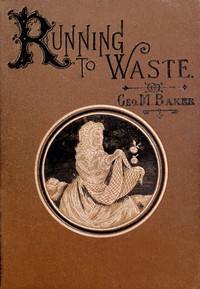
Running to Waste: The Story of a Tomboy by George M. Baker
Published in 1874, Running to Waste: The Story of a Tomboy feels like a secret door into a past that's more complicated than we remember. George M. Baker gives us a story that's less about grand adventure and more about the quiet, daily battle of being yourself.
The Story
We follow a young, unnamed heroine who is the despair of her traditional community. She's energetic, outspoken, and prefers the freedom of the outdoors to the confined, delicate pursuits considered proper for girls. The adults in her life—worried aunts, stern guardians—see her vibrant personality as a problem to be solved. They believe her untamed spirit is a precious resource being 'wasted,' and they're determined to reform her into a conventional young lady. The plot follows her struggles against this pressure. It's a series of small rebellions and misunderstandings, where her natural honesty and courage are constantly misread as rudeness or folly. The central question is simple: Will she be broken and remade, or can she find a way to be accepted for who she is?
Why You Should Read It
What grabbed me wasn't a twisty plot, but the character herself. Her frustration is so real. You feel for her when she's punished for being genuinely helpful just because it wasn't 'ladylike.' Baker doesn't make her a perfect angel; she's stubborn and gets into scrapes, which makes her struggle believable. Reading this in the 21st century, you get this fascinating double perspective. You see the rigid social rules of the time with clear eyes, but you also see a timeless story about individuality. It's a gentle but firm argument that a person's value isn't in how well they conform.
Final Verdict
This is a perfect pick for readers who love character-driven stories and historical fiction that doesn't feel dusty. If you enjoyed the spirit of Jo March in Little Women but wanted to see a version who pushes against the boundaries even harder, you'll find a kindred spirit here. It's also a great, accessible read for anyone curious about 19th-century social history from a very personal angle. Don't expect high drama; expect a sincere, moving portrait of a girl fighting for her right to exist on her own terms. Her war might be fought with frowns and sewing lessons instead of swords, but it matters just as much.
This content is free to share and distribute. You do not need permission to reproduce this work.
Patricia Miller
1 year agoIt took me a while to process the complex ideas here, but the breakdown of complex theories into digestible segments is masterfully done. I’ll definitely be revisiting some of these chapters again soon.





Michael Martinez
1 year agoMy first impression was quite positive because the bibliography and references suggest a high level of research and authority. A trustworthy resource that I'll keep in my digital library.