
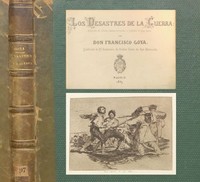
Los Desastres de la guerra: by Francisco Goya
Let's be clear from the start: 'Los Desastres de la Guerra' (The Disasters of War) isn't a novel. It's a series of 82 etchings created by Francisco Goya between 1810 and 1820. There's no linear plot with characters, but there is a devastating narrative arc. It's the story of the Spanish Peninsular War (1808-1814), told not from a history book's perspective, but from the gutters and the ruins.
The Story
Goya witnessed the brutal guerrilla warfare between Spanish citizens and Napoleon's occupying French army. His etchings capture that chaos in stark, unforgiving black and white. The series begins with the spark of conflict and quickly descends into a hellscape. We see the initial violence of soldiers, but the focus rapidly shifts. We're shown the consequences: mass executions, rape, famine, and disease. The images are raw and graphic—bodies piled high, people driven to madness, the desperate fight for survival. The final plates, added later, shift to a more allegorical critique of the oppressive Spanish monarchy that followed the war, making it a condemnation of violence and tyranny in all forms.
Why You Should Read It
This isn't art for decoration. It's art as a witness and a scream of protest. What gets me is Goya's unflinching eye. He doesn't paint heroes. He paints victims and perpetrators, often making it hard to tell them apart in the moral mud. The captions, like 'I saw this' or 'This is worse,' pull you directly into his horrified perspective. The power comes from its simplicity and honesty. It strips away all the propaganda and shows you the universal cost: broken people. It makes you feel the weight of each life lost, the terror in every face. It's emotionally draining, but that's the point. It forces you to look.
Final Verdict
This is for anyone who believes art should challenge and provoke, not just please. Perfect for history buffs who want to see past the dates and treaties, for fans of graphic novels or photography who appreciate powerful visual storytelling, and for anyone trying to understand the human cost behind today's headlines. It's not a relaxing coffee table book. It's a necessary, haunting mirror. Keep it nearby, but be prepared—it will stay with you long after you close it.
This is a copyright-free edition. It serves as a testament to our shared literary heritage.
Nancy Harris
8 months agoThe analytical framework presented is both innovative and robust.
Edward Nguyen
1 year agoHaving read this twice, the clarity of the writing makes this accessible. I will read more from this author.
Melissa Hill
2 years agoFive stars!
Richard Garcia
1 year agoFast paced, good book.

Barbara Johnson
1 year agoThe analytical framework presented is both innovative and robust.